
Guides
Soil carbon glossary: the terms explained in plain English
Plain-English definitions of the soil carbon terms farmers, buyers and project developers meet, from SOC[…]
Soil carbon measurement for farms: the complete guide
What soil carbon measurement is, why farms measure every year, how it is done, when,[…]
Soil organic carbon and yield: what five annual monitoring cycles are showing
Two droughts in five years, one wet winter, and an emerging relationship between soil organic[…]
How soil carbon is measured: samples, satellite and the error stated
Physical samples analysed by dry combustion in an ISO-accredited laboratory, tied to satellite imagery at[…]

Does regenerative farming build soil carbon? What the evidence shows
Grass leys, less cultivation, cover crops and manures: what the research finds for each, why[…]
Carbon schemes for farmers: 12 questions to ask before you sign
How your carbon is quantified, who owns the data and the credits, what you pay,[…]
What is soil organic carbon, and why does it matter on a farm?
Soil organic carbon explained: what it is made of, why it governs structure, water and[…]
How to increase soil organic carbon: what works on a farm
Living roots and green cover, more diversity in the rotation, less cultivation, residue and organic[…]

Soil carbon baseline: what it is, when it is taken and what you receive
The first soil carbon measurement of your fields, taken in the autumn-winter window: why it[…]
Soil carbon testing cost per hectare in the UK: what actually sets the price
Soil carbon testing is a flat rate per hectare, set by the tier you choose.[…]
Why soil carbon is measured once a year, and why the autumn–winter window
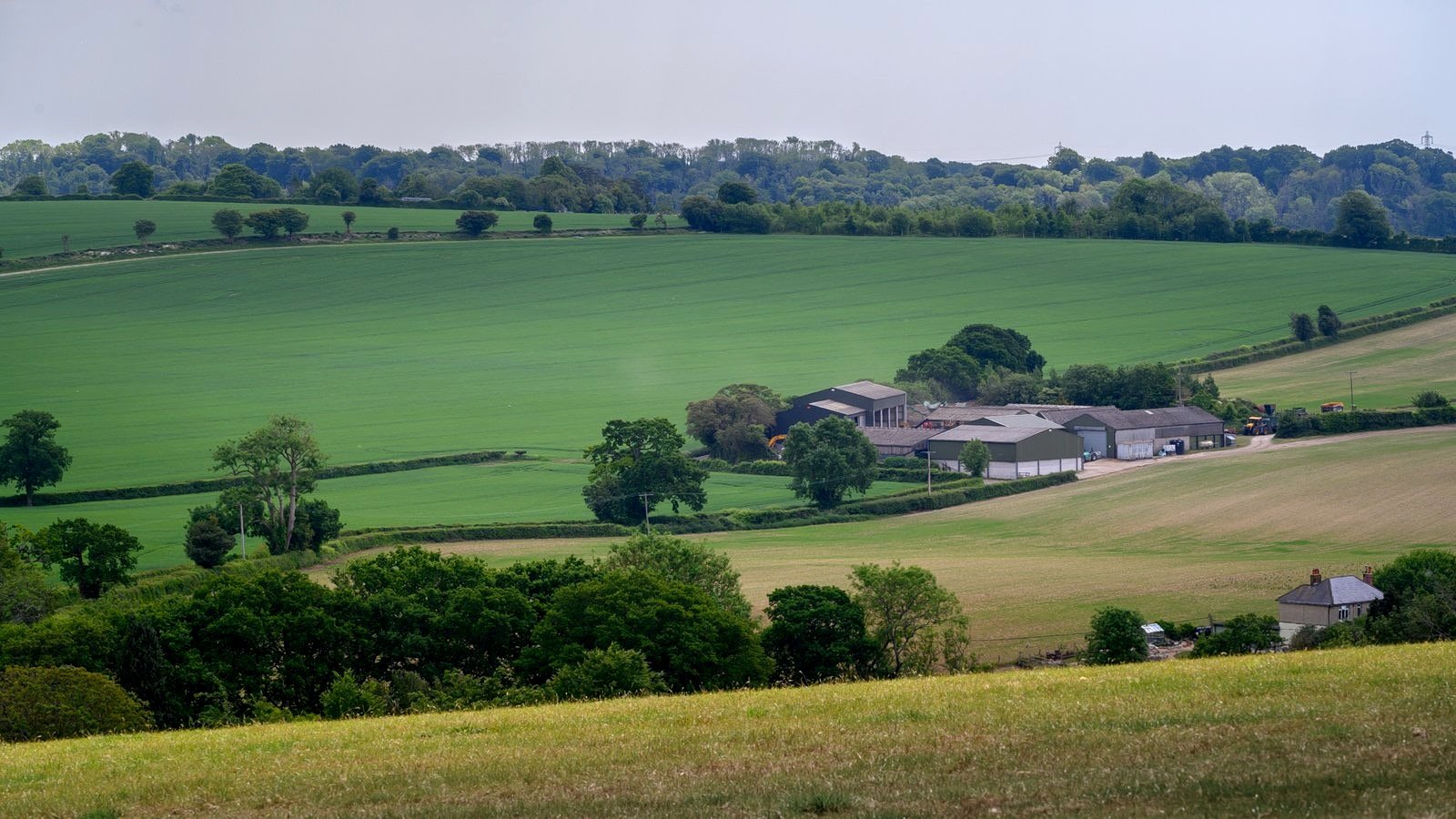
Soil carbon has to be sampled at the same point in the year for the[…]
Carbon removal and avoidance credits: what is the difference?
Removal credits stand for carbon taken out of the atmosphere, avoidance credits for emissions prevented.[…]
Farm carbon audit or soil carbon measurement: what is the difference?
A carbon audit estimates what the farm emits from its records. Soil carbon measurement shows[…]
Accuracy stated: how the error in a soil carbon result is measured and deducted
Every Ecometric result carries its accuracy. How the error is measured against samples the AI[…]
Soil health testing in the UK: where soil carbon fits
What the Farming Rules for Water require you to test, what a standard pH, P,[…]
Soil carbon testing in the UK: the methods compared
Loss on ignition, dry combustion, spectral probes and satellite mapping compared: what each soil carbon[…]

Soil carbon credits for UK farmers: how they work and when they make sense
How soil carbon credits are measured, verified and sold as insets or offsets, who stands[…]
How carbon credits are verified: validation, verification and ISO 14065
What validation and verification bodies check, the ISO standards behind them, how verification works for[…]
Carbon credit ratings explained: what BeZero and Sylvera ratings mean
What a carbon credit rating is and is not, how the BeZero and Sylvera scales[…]
How much can a farm earn from soil carbon credits?
What decides how many soil carbon credits a farm has to sell: the measured gain,[…]
Latest News
Follow us on LinkedIn
Frequently asked questions
The measurement
We measure the soil organic carbon in your fields, once a year, and report the change against your own baseline. Real soil samples, laboratory analysis and satellite imagery, field by field, with the accuracy stated. The results are yours. Emissions reporting and carbon credits are separate tiers, added only when you ask for them.
Measured. We take real soil samples on every farm we monitor and analyse them by dry combustion in an ISO-accredited laboratory. Nothing is estimated from a list of practices you say you follow. Your result is measured from your soil.
Real samples anchor every result, and satellite and AI extend them across the field. Our AI ties your samples to satellite imagery at 100 readings a hectare, a value every 10 metres, giving a map and a more accurate field total rather than a list of sample results. The step-by-step method is in how soil carbon is measured.
Your report: change against your own baseline, field by field, with the accuracy stated, and a map with a value every 10 metres. Our growing dataset tracks annual change in soil carbon, management practice, yield and emissions across every project we monitor, so we can tell you not just what happened on your farm, but what worked on farms like it.
No. We measure what your management actually does to the soil in each climatic year. We tell you how your soil is reacting. You decide how to adapt.
Your SBI number and a short call to agree field boundaries and sampling access. Sampling access is arranged around your operations, and the cycle is completed with management records you already keep.
Accuracy and evidence
Every result is reported against your own baseline with the accuracy stated. The error is measured against samples the AI never saw, then deducted in full. See how the accuracy is stated.
Physical sampling is time consuming and costly to deliver at a density that takes account of the significant in-field spatial variation. This is where the additional spectral sampling of Ecometric’s system at a density of 100 points per hectare adds significantly to the total sample numbers, improving quantification accuracy over a soil sampling-only system.
Our method went through four rounds of independent scientific review to earn Regen Registry accreditation and its own credit class. Audited by Carbon Direct and Nova-Cert, verified to ISO 14065, rated by BeZero in the global top 30%. We were also commissioned by WWF to write the soil health measurement paper for Codex Planetarius, published in December 2025.
Yes. Supplier-specific data to the standards their auditors will use from 2027, and every round is measured to full Registry standard whichever tier you are on. If your buyer asks for emissions as well, that is tier 02, added when your supply chain asks for it.
The finance and insurance industries have picked up on the relationship between soil carbon change and yield, and are now beginning to value evidenced soil resilience through rate reductions for working capital and mortgages. We are actively working on enabling wider access to these risk rated products.
Soil carbon loss is invisible. It appears in a poor season, as yield loss you cannot explain. Measured every year against your own baseline, a decline can be corrected while the fix is a rotation change rather than a rebuild.
Cost and commitment
Pricing depends on the tier you choose. The measurement is the same in every tier. Emissions reporting and registry work are added only when you need them. We charge for the service and never take a commission on your carbon. Send us your SBI number and hectares and we will send a written quote within two working days.
Yes. We have separated measurement from reporting, so you are not paying for a carbon project you may not need yet. Registry submission is held back until there is direct demand for insets or offsets. That brings the cost of monitoring down while leaving the option to trade open.
Pricing depends on the tier you choose. Send us your SBI number and hectares and we will send a written quote within two working days.
Our minimum project area is 150 hectares, and it does not have to be your whole farm. See what 150 hectares means in practice.
Invoicing is split into four payments, due on contract signature, data collection, soil sampling and lab analysis, and report delivery.
No lock-in, and never a commission. We are paid for the measurement, not a share of your carbon, so our advice is not biased by what earns us more. If you stop working with us you take your baseline and every measurement with you.
Timing and getting started
In the autumn–winter sampling window, timed around your cropping. The 2026 autumn–winter window is open until the end of February 2027.
Soil carbon has to be sampled at the same point in the year for the change to be real. More in why soil carbon is measured once a year.
Your baseline will be delayed by a year, with sampling beginning again in autumn 2027. Every year without measurement is a year of decisions made without knowing which way the soil is going.
Send us your SBI number and hectares and we will send a written quote within two working days. Then a short call to agree field boundaries and sampling access.
Your starting point. Soil sampling and satellite imagery set it, field by field. Each year after that we sample and analyse again, timed around your cropping, and report the change against your own baseline, with the accuracy stated. More in what the baseline is.
Yes. More than 250 projects in 11 countries, covering arable, grassland restoration, re-wilding and afforestation, all measured the same way to the same standard.
Reporting, credits and buyers
When your supply chain asks for it. Tier 02 adds a full IPCC Tier II emissions calculation, reported to the standards your buyers’ auditors will use from 2027: both sides of the ledger, what the farm emits and what it removes.
Registry submission is now held back until there is direct demand for insets or offsets, which is what brings the cost of routine monitoring down. Every round is still measured to full Registry standard, so stepping up to a carbon project is a decision rather than starting again.
Yes, through tier 03, added when there is real demand for insets or offsets: a registry-accredited project, verified removals issued in your name for each tonne sequestered after greenhouse gas emissions are deducted, sold on your terms and commission-free.
An inset stays inside the supply chain that produced it. An offset is sold outside that supply chain. Both come from the same measured removals: each tonne sequestered after greenhouse gas emissions are deducted.
Buyers who audit what they buy. Our credits are measured, net-negative removals, issued for each tonne sequestered after greenhouse gas emissions are deducted, with an immutable ledger behind them, and they have been bought by organisations including the Mercedes-AMG PETRONAS Formula One team.
Yes. The protocol is open for adoption by any Project Developer anywhere in the World, and every project is measured the same way, to the same standard. See for project developers.
